EU Directive vs SOX 806 vs Dodd-Frank: One Platform, Three Regimes
- 11 minutes readA multinational employer with EU operations and US public-company exposure has to satisfy three whistleblowing regimes from a single platform: EU Directive 2019/1937, Sarbanes-Oxley Section 806, and Dodd-Frank Section 922. The engineering rule of thumb, verified against the three statutes as of April 2026, is to default every workflow to the strictest regime (the EU directive’s 7-day acknowledgement and 3-month feedback timers), then layer SOX-specific audit-committee routing and Dodd-Frank’s “anonymous via counsel” carve-out as overlays on top. Configure once to the EU baseline and the US obligations become additive routing rules on one pipeline.
Key Takeaways
- EU + US public-company exposure means satisfying all three regimes from one platform.
- The EU directive is the strictest on channels and timers; default to it.
- SOX 806 requires audit-committee routing for accounting, audit, and internal-controls reports.
- Dodd-Frank pays a 10-30% bounty on SEC sanctions over $1M; anonymous SEC tips need legal counsel.
- One tenant with regional tagging beats per-jurisdiction tenants.
What does each of the three regimes cover?
The three statutes were drafted in different decades for different reasons, and they take quite different approaches to how a channel should behave.
EU Directive 2019/1937 applies to private legal entities with 50 or more workers and to most public-sector entities. It mandates internal reporting channels with a 7-day acknowledgement and a 3-month feedback timer (extendable to 6 months for external channels), broad anti-retaliation covering 15 named forms of detriment in Article 19, and a reverse burden of proof in Article 21.5. Member states had until 17 December 2021 to transpose the directive; as of April 2026 the European Commission’s July 2024 transposition report finds all member states have transposed the main provisions but flags compliance gaps on material scope, conditions for protection, and penalties.
 Image: Steven Lek on Wikimedia Commons, CC BY-SA 4.0

Sarbanes-Oxley Section 806 (2002) applies to publicly traded companies and, since the Supreme Court’s Lawson v. FMR decision in March 2014, to their contractors and subcontractors as well. It requires a confidential and anonymous channel for accounting, internal-controls, and audit concerns, and the audit committee, not management, is the prescribed recipient for those reports. Retaliation complaints go to OSHA at the US Department of Labor within 180 days of the adverse action; OSHA can order preliminary reinstatement and the case can move on to a Department of Labor administrative law judge.
 Image: AgnosticPreachersKid on Wikimedia Commons, CC BY-SA 3.0

Dodd-Frank Section 922 (2010) created the SEC Whistleblower Office and a bounty program that pays whistleblowers between 10 and 30 percent of monetary sanctions imposed on a corporation when those sanctions exceed $1 million. Anti-retaliation protections also attach, with the scope for purely internal reporters narrowed by the Supreme Court’s Digital Realty Trust v. Somers decision in February 2018: internal-only reporters now rely primarily on Section 806 for retaliation claims. Anonymous SEC tips are permitted, but only when submitted through legal counsel using Form TCR.
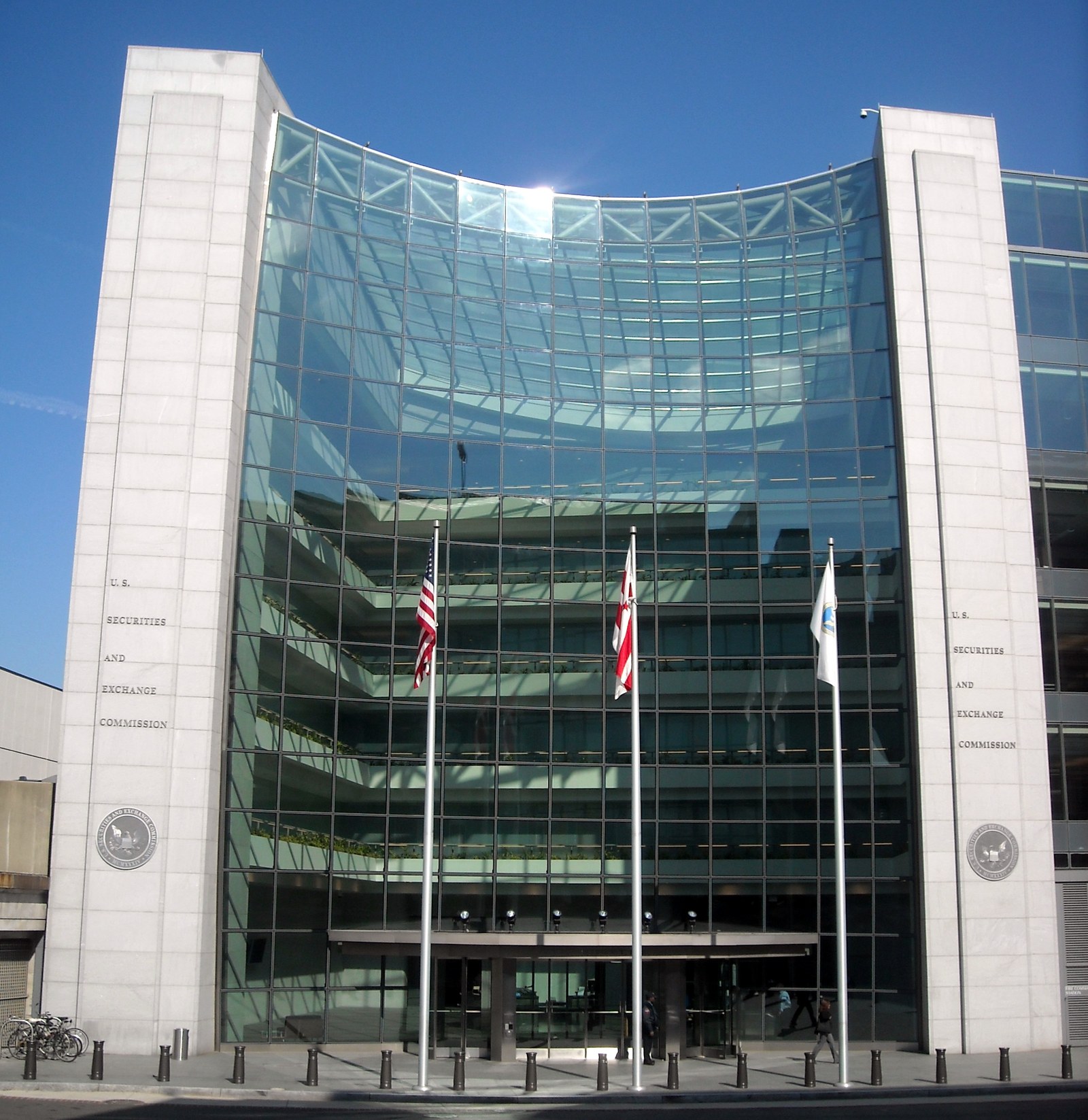 Image: AgnosticPreachersKid on Wikimedia Commons, CC BY-SA 3.0

How do the three regimes overlap and where do they diverge?
At a slide level the three regimes look similar (each protects whistleblowers, each imposes some kind of channel obligation), but they diverge sharply in scope, channel design, and remedies. The table below is the artifact worth keeping next to the platform configuration screen.
| Requirement | EU Directive 2019/1937 | SOX Section 806 | Dodd-Frank Section 922 |
|---|---|---|---|
| Who must operate a channel | Private entities with 50+ workers; most public entities | All US publicly traded companies (issuers) | No channel mandate; SEC operates the external channel |
| Who is protected | Workers, ex-workers, applicants, contractors, shareholders, volunteers | Employees, contractors, subcontractors of public companies | Persons providing information about securities-law violations |
| Anonymous reporting | Member-state option; permitted in most transpositions | Confidential and anonymous channel mandated for accounting/audit concerns | Anonymous SEC tips only via legal counsel (Form TCR) |
| Acknowledgement timer | 7 days from receipt | None specified | None specified |
| Feedback timer | 3 months internal, up to 6 months external | None specified | None specified |
| Audit-committee routing | Not required | Required for accounting, audit, internal-controls reports | Not required |
| Retaliation forum | National courts; Article 21.5 reverse burden of proof | OSHA, then DOL administrative law judge, then federal court | Federal court (jury trial available); SEC oversees bounty |
| Retaliation filing deadline | Set by national transposition (commonly 6 months to 3 years) | 180 days from adverse action | 6 years (or 3 years from discovery, whichever is shorter) |
| Bounty / monetary incentive | None | None | 10 to 30 percent of monetary sanctions over $1M |
| Cross-border reach | Territorial: applies in member states | Extends to overseas employees of US issuers in some circuits | Reaches violations of US securities law regardless of reporter location |
Each regime acts on a different layer of the system. The EU directive governs how the channel runs (timers, formats, confidentiality), SOX governs who hears the report (the audit committee), and Dodd-Frank governs what happens once the SEC gets involved (the bounty and the counsel-only anonymity rule). One platform can carry all three because they touch different layers.
How should one platform configure routing for SOX 806 audit-committee delivery?
This is the configuration that breaks most often in cross-border deployments, and it is the one that external auditors will ask about by name. Section 806 and the audit-committee provisions of Section 301 of the same statute together require that an employee of a US issuer who raises an accounting, internal-controls, or auditing concern has a path that reaches the audit committee directly, not just a line manager or a generic compliance officer.
A platform that satisfies the EU directive’s intake requirements will not satisfy this routing requirement automatically. The fix is structural and not difficult, but it has to be wired in deliberately:
- Define case categories that explicitly include “accounting”, “audit”, “internal controls”, and “financial reporting fraud”, and tag them as SOX-relevant in the platform’s category metadata.
- Add a recipient role called “audit committee” that is distinct from “compliance officer” and that holds its own cryptographic key, so that the audit committee can decrypt SOX-relevant submissions without a compliance-officer middleman.
- Build a routing rule so that any case tagged SOX-relevant is automatically copied to the audit-committee role on intake, regardless of whether the primary recipient is a compliance officer, a regional ethics lead, or an external case manager.
- Keep an audit-trail entry for every audit-committee delivery, with cryptographic proof of receipt, so that external auditors verifying SOX compliance can reconcile the channel against the case log.
- Re-trigger the routing rule on category change: if a triage step reclassifies a “general HR” report as an “accounting” report, the audit-committee copy must fire on reclassification, not only on initial intake.
The cross-reference for engineers building this from scratch is the platform-anatomy post on this blog, which treats triage and routing as the second of the platform’s core components.
How does Dodd-Frank’s “anonymous via counsel” rule affect the platform?
Most engineers wiring a corporate whistleblowing platform have never seen the SEC’s Form TCR rules and assume that any anonymous channel is good enough for downstream SEC referral. It is not. Under Dodd-Frank Section 21F and the SEC’s implementing regulations, a whistleblower may submit a tip to the SEC anonymously, but only when the tip is submitted through legal counsel; the corporate platform cannot route an anonymous tip directly to the SEC without breaking the eligibility chain.
That has three knock-on consequences for platform design:
- The platform should not auto-forward cases to the SEC. That decision belongs to the reporter (acting with their own counsel) or to the employer’s general counsel acting as a separate channel; an auto-forward feature on the corporate platform can identify the reporter to the SEC and disqualify them from anonymous bounty consideration.
- If the platform offers an external-counsel handoff (a feature where a reporter can route a case to an external law firm directly), it must preserve the reporter’s anonymity end-to-end, because re-identification on the way to the SEC breaks the bounty path under Form TCR.
- Anti-retaliation under Section 21F-17 still attaches to internal reporters in many fact patterns, even after Digital Realty v. Somers narrowed the headline anti-retaliation provision; the platform’s role is to preserve the evidence trail (timestamps, content hashes, recipient logs) so that a later retaliation claim, whether under Dodd-Frank or under Section 806, has a defensible paper record.
The practical consequence: build the corporate platform as if the SEC channel does not exist, and let counsel decide whether and how to escalate.
What is the platform-level rule of thumb for operating in all three regimes?
When a single platform must cover the EU directive, SOX 806, and Dodd-Frank at the same time, five configuration heuristics get you most of the way there:
- Default every timer to the EU directive: acknowledgement at 7 days, feedback at 3 months, for every category in every region. SOX has no statutory timer, so the EU baseline never under-shoots, and Dodd-Frank does not regulate internal channel timing at all.
- Make audit-committee routing automatic on accounting, audit, and internal-controls categories. It is required by SOX 806, harmless under the EU directive, and irrelevant under Dodd-Frank. Triggering it on the category tag rather than on the reporter’s selection means a reporter who picks the wrong category still ends up in front of the right recipients.
- Allow anonymous reporting by default where the relevant member state permits it, and document the receipt-code mechanism (the alphanumeric token a reporter uses to retrieve responses without identifying themselves). One design satisfies the EU directive’s Article 6.3 confidentiality chain and the SOX 806 confidentiality-and-anonymity requirement together.
- Do not auto-forward cases to external authorities. No automatic SEC submission, no automatic national-competent-authority routing. The reporter, with counsel, decides whether to escalate; the platform’s job is to preserve the evidence and the reporter’s options.
- Enforce retention separately on submission body, attachments, in-platform messaging, and audit trail. The audit trail must outlive the case itself for retaliation-defence purposes, because both the EU directive’s Article 21.5 reverse burden and SOX 806’s evidentiary needs depend on a clean, long-lived log even after the substantive case file has been minimised under GDPR.
A single tenant with regional tagging is usually the right architecture for this rule set. Separate per-jurisdiction tenants split the audit-committee routing across silos (which is how SOX deliveries get missed) and they raise the chance that the same case gets reported twice, once by an EU subsidiary and once by the US parent.
When NOT to Use This
This comparison is aimed at engineers and compliance leads at multinationals that have to satisfy all three regimes at once. Several adjacent situations are out of scope:
- You operate exclusively in the EU and have no US public-company exposure. The EU-only checklist post on this blog is more focused for that case.
- You operate exclusively in the US and have no EU subsidiaries. You can skip the EU-directive overlay entirely and design directly to SOX 806, Dodd-Frank, and OSHA.
- You need country-by-country EU detail, for example the deltas between Germany’s HinSchG, France’s Sapin II, and the UK’s PIDA. The multi-jurisdiction mapping post covers those national specifics.
- You only handle external SEC reporting, not internal corporate intake. That is a legal-counsel workflow built around Form TCR, not a corporate-platform workflow, and the design constraints are different.
- You are looking for legal advice on a specific retaliation matter. This post is an engineering-side comparison written for platform configuration, not legal counsel; specific cases need a lawyer with subject-matter expertise in your jurisdiction.
FAQ
Do we need three separate platforms for the EU directive, SOX 806, and Dodd-Frank?
No. One platform can satisfy all three if the triage and routing component supports per-category audit-committee delivery and per-tenant timer enforcement. Separate platforms tend to fragment the audit trail and double-route the same case.
What is the SOX Section 806 audit-committee routing requirement?
US public-company employees who submit a concern about accounting, internal controls, or auditing must have a path that reaches the audit committee, not just management. The platform should automate this as a routing rule on SOX-relevant categories so that reclassification or category mistakes do not bypass the audit committee.
Can Dodd-Frank bounties go to internal reporters who never went to the SEC?
The Supreme Court’s Digital Realty v. Somers decision in February 2018 narrowed the retaliation scope for purely internal reporters, and bounty eligibility under Section 922 generally requires that the SEC ultimately receives information that leads to enforcement. A reporter who only ever reports internally can still be protected by SOX 806 and by Section 21F-17 anti-retaliation in many fact patterns, but the bounty itself flows from SEC-received information.
Where do retaliation complaints go in the US?
Under SOX 806 and most other federal whistleblower statutes administered by OSHA, the retaliation complaint is filed with OSHA within 180 days of the adverse action. The case can then move to a Department of Labor administrative law judge, then to the Administrative Review Board, and onward to federal court if either side requests it.
Which regime is the strictest on platform design?
The EU directive. It prescribes channel formats, acknowledgement and feedback timers, confidentiality controls, and a reverse burden of proof with more specificity than either US statute. Default the platform to the EU baseline and treat SOX and Dodd-Frank as overlays that add audit-committee routing and counsel-handoff handling.
Does Dodd-Frank apply to non-US employers?
Yes for violations of US securities law, regardless of where the reporter is physically located, but the practical reach depends on the jurisdiction of enforcement and the SEC’s own priorities. A non-US employer whose securities trade in US markets, or whose conduct touches US investors, can be inside Dodd-Frank’s scope even when the reporter is in Frankfurt or Singapore.