The 5 Best Whistleblowing Software Platforms in 2026
- 8 minutes readThe best whistleblowing software in 2026 is rarely decided on features, since most platforms look identical on a feature list. They differ in who each one fits once you test it against a regulation, a budget, and a deadline. This is an opinionated shortlist of five whistleblowing platforms, ranked by fit and weighed on three things: pricing, EU data residency, and whether AI is anywhere in the reporting path. They run from the largest global enterprise suite down to a free self-hosted option, so the right pick depends on which row describes your organisation.
The evaluation is narrow. Does the platform track the 7-day acknowledgement and 3-month feedback deadlines that EU law imposes? Where does it store the data? Can a reporter stay anonymous? And does it push allegations through an AI layer that brings the whole system into scope under the EU AI Act?
Key Takeaways
- NAVEX is the incumbent enterprise GRC suite: deepest breadth, US heritage, quote-only pricing, best fit for multinationals that already run a formal compliance programme.
- SpeakUp wins when you need staffed and automated phone intake across dozens of countries and languages, at the cost of a longer rollout.
- WeMoral is the fastest EU mid-market fit: affordable published pricing, Frankfurt hosting, and automatic deadline tracking.
- EQS Integrity Line suits large European enterprises that value works-council familiarity and group-wide reach over quick deployment.
- GlobaLeaks is free, open-source, and self-hosted, with the lowest cost and the strongest anonymity, but you own the servers, the patching, and the uptime.
How to read this shortlist
Every platform here can meet the letter of EU Directive 2019/1937 if configured correctly. The differences that decide a purchase are practical: entry price and whether it is even published, whether your data is stored inside the EU, how long deployment takes, and whether an AI component stands between the reporter and the case handler. That last point has regulatory weight: a plain rule-based intake falls outside the EU AI Act, whereas AI triage, scoring, or a chatbot in the reporting path can create high-risk-AI obligations and introduce translation or scoring errors that damage a live case.
1. NAVEX: the enterprise incumbent
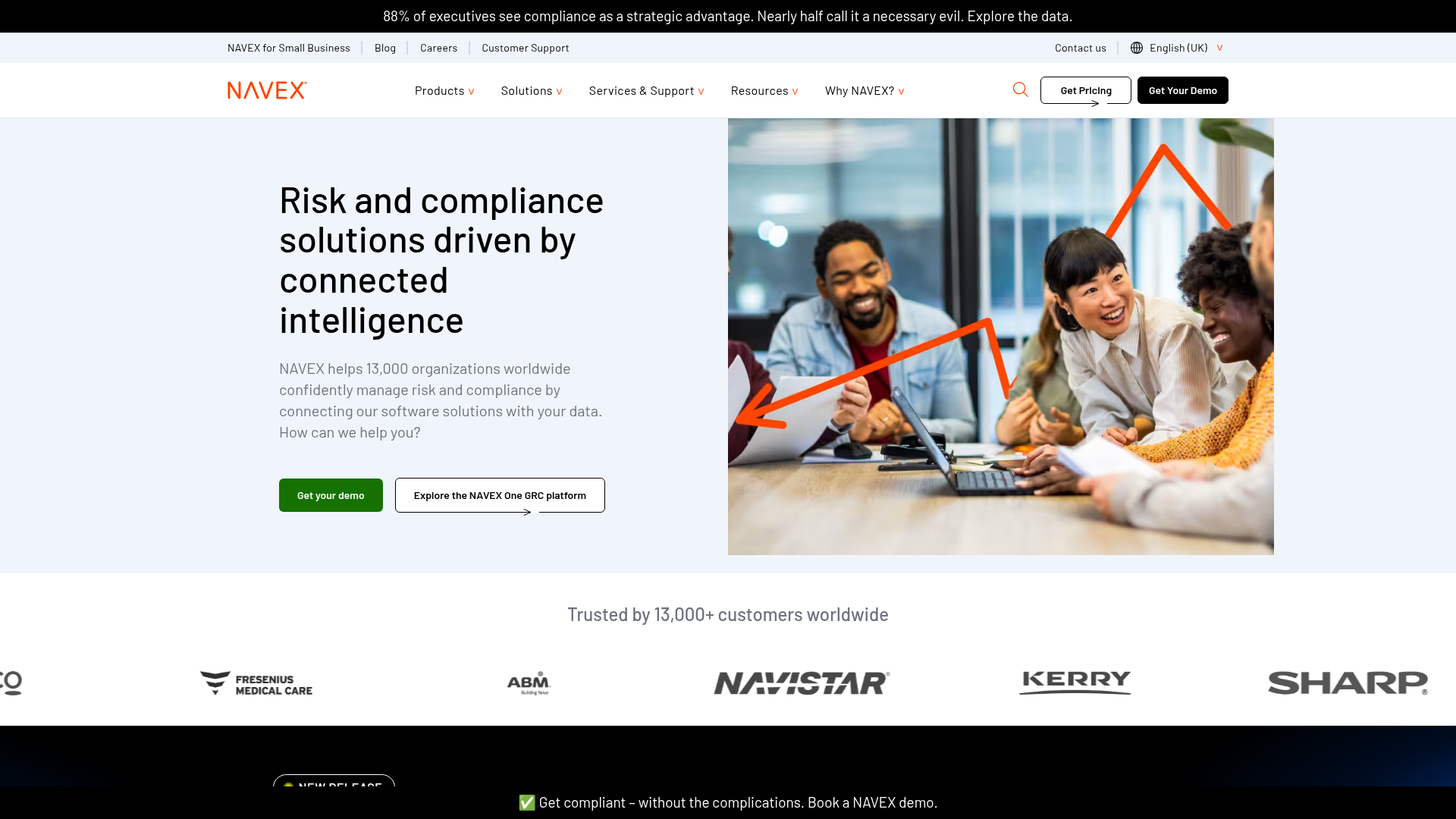
NAVEX is the reference point the rest of the market measures itself against. Its EthicsPoint hotline is part of a broader governance, risk, and compliance suite that folds in policy management, ethics training, and third-party risk, the whole apparatus a large corporation is expected to run, on one contract.
- Best for: global corporations with a mature, formal GRC programme.
- Pricing: quote-based; expect an enterprise sales cycle rather than a checkout page.
- Data hosting: US-centred, with a Frankfurt EU option available on request.
- Watch-outs: the breadth is aimed at large programmes and prices accordingly; the US heritage means EU data residency needs to be specified explicitly; and the newer AI-powered features can pull the deployment into EU AI Act obligations, so scope them carefully before switching them on.
If you are a mid-sized company that wants a reporting channel and nothing else, NAVEX is more platform than you need. If you are a multinational already thinking in terms of an integrated compliance stack, it is the safe institutional choice.
2. SpeakUp: built for phone intake at scale
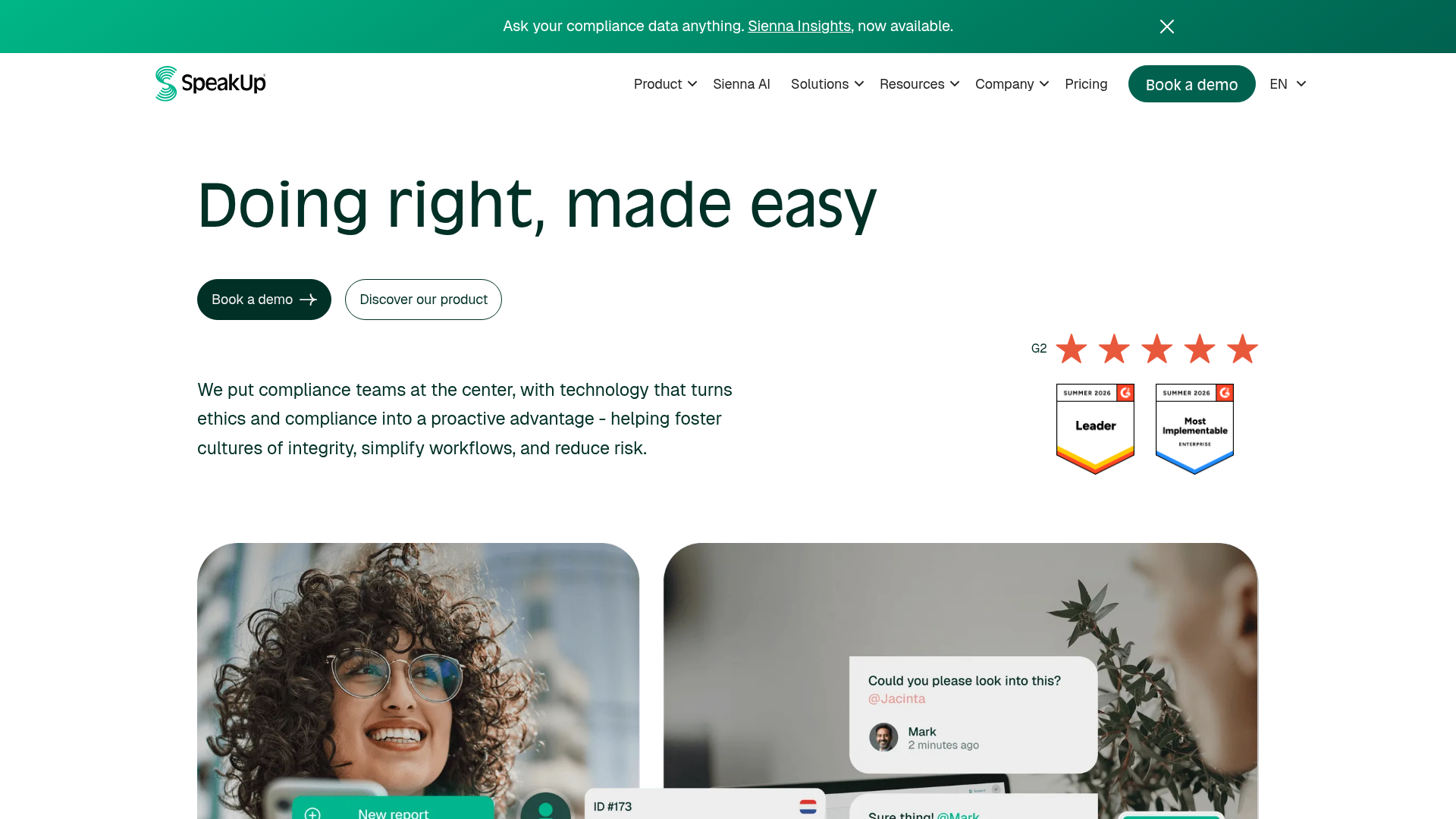
SpeakUp earns its place on the strength of intake breadth. Web, mobile app, and telephone reporting run through one system in more than a hundred languages, which is exactly what a workforce spread across many countries needs: a warehouse worker without a corporate laptop can still pick up a phone in their own language.
- Best for: global firms that need staffed or automated phone hotlines alongside web reporting.
- Pricing: quote-based, at the premium end.
- Data hosting: EU options available.
- Watch-outs: the AI voice agent that transcribes phone reports adds regulatory surface under the AI Act, and a misheard allegation is a damaged case; implementation runs into weeks rather than minutes.
Choose SpeakUp when telephone intake is a hard requirement across borders. If nearly all your reports will arrive through a web form, you are paying for channels you will not use.
3. WeMoral: the fast EU mid-market fit
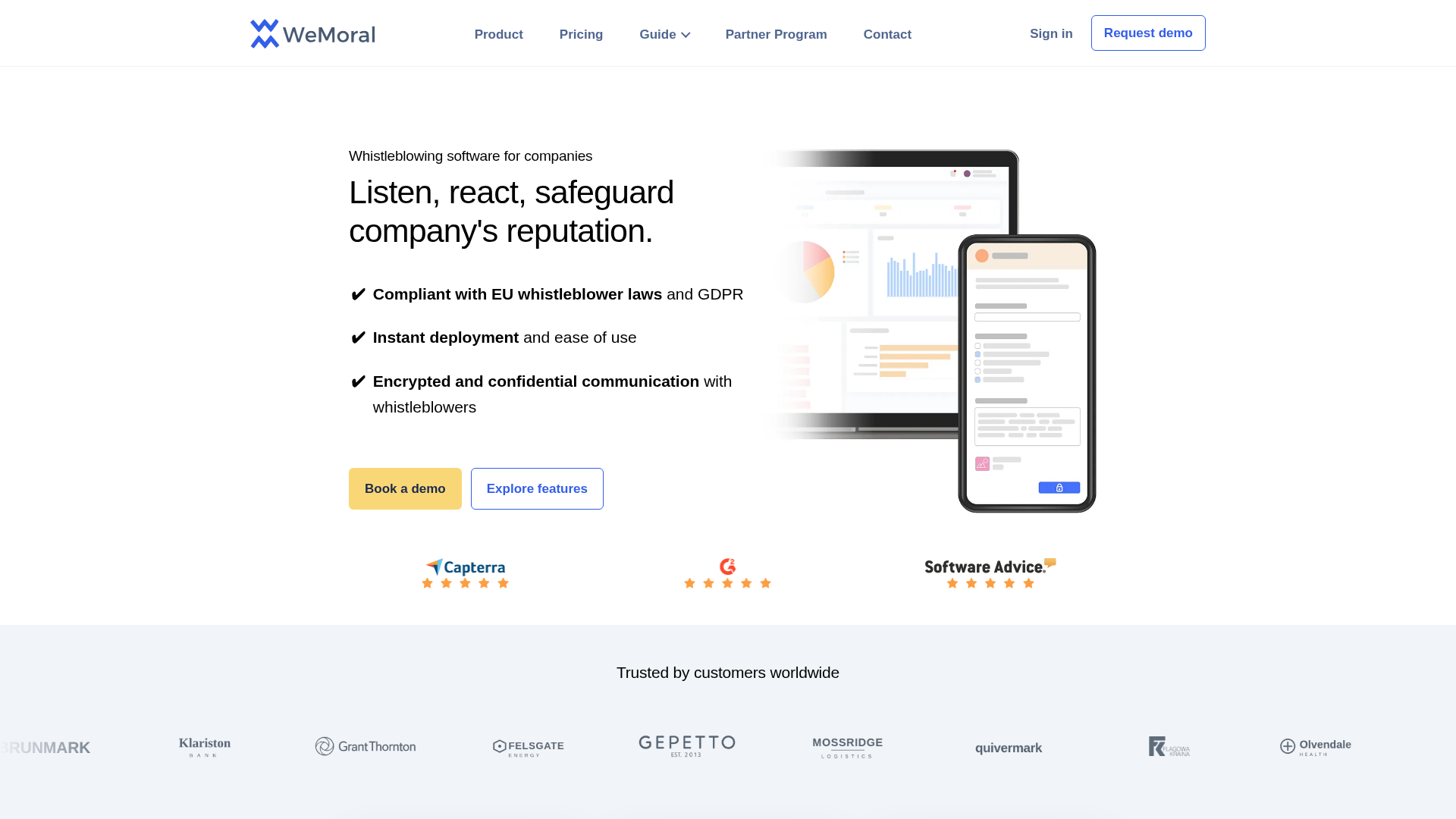
WeMoral is built for the company that the 50-employee threshold just caught and that does not have a procurement department to run a three-month tender. It covers the compliance essentials (anonymous two-way encrypted dialogue, automatic deadline tracking, audit logging, and form intake in 25 languages) and deliberately keeps AI out of the reporting path, leaving the system outside AI Act scope by design.
- Best for: EU mid-market companies (roughly 50-250 employees) that want to be compliant this week.
- Pricing: published, from €79/month on annual billing, with a free trial.
- Data hosting: Frankfurt, Germany.
- Watch-outs: pricing scales with the number of case-handler seats rather than headcount, so a large handling team changes the maths.
Deployment is measured in minutes, and the published price means you can budget without a sales call. For the mid-market, that combination of EU hosting, transparent pricing, and no AI burden is the pragmatic default. You can see the full feature set on the WeMoral site.
4. EQS Integrity Line: the European enterprise counterpart
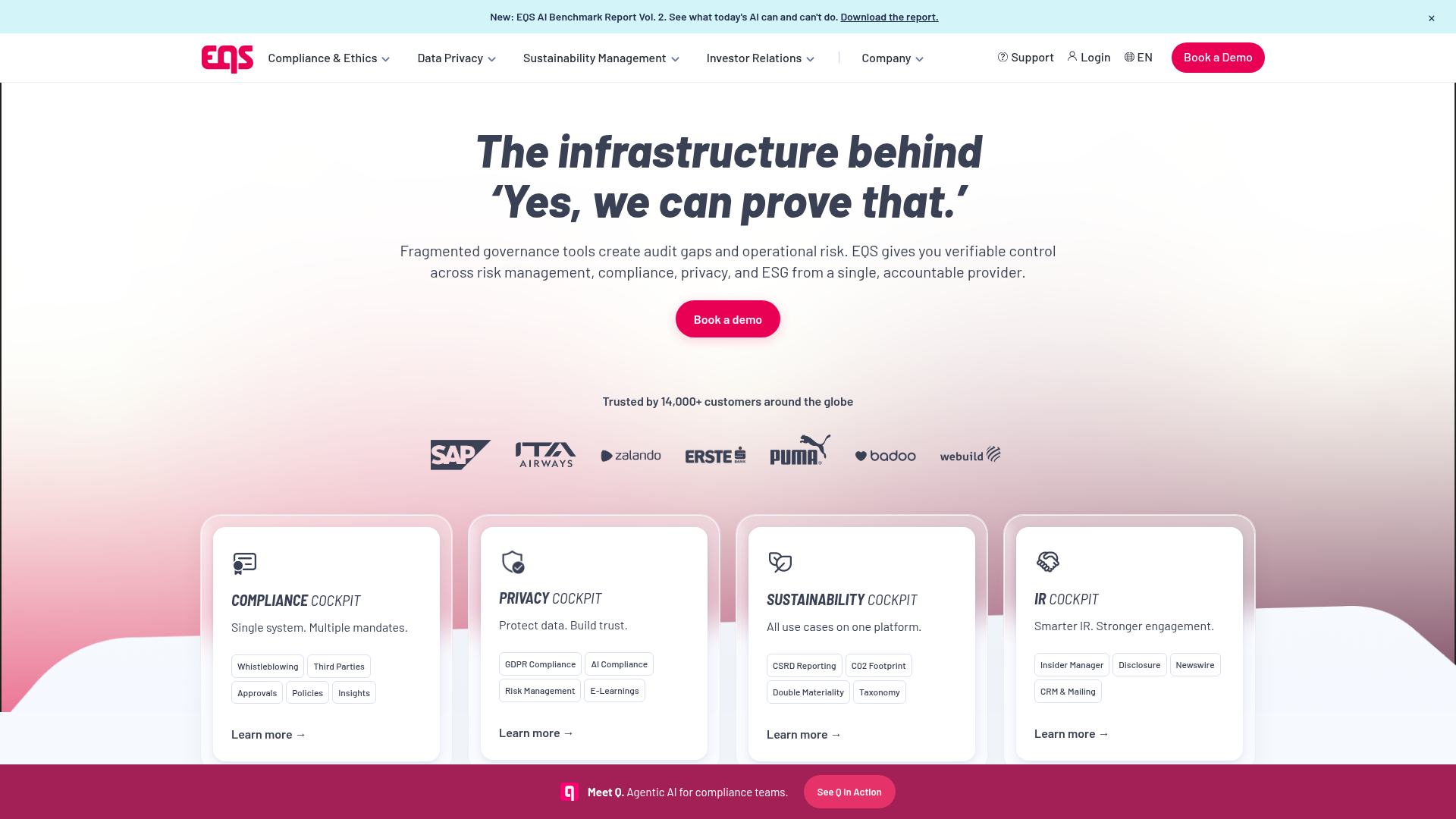
EQS Integrity Line is the European counterpart to NAVEX: an enterprise-grade tool inside a larger compliance and governance platform, with the works-council familiarity that large German and European organisations tend to insist on. Support for complex group structures and intake in 80-plus languages are the headline strengths.
- Best for: large European enterprises that weight vendor familiarity and internal-stakeholder trust above speed.
- Pricing: quote-based, at the enterprise level.
- Data hosting: Germany.
- Watch-outs: it is designed for scale and priced for it; the AI translation feature carries a mistranslation risk on allegations, where precise wording is what counts.
Where WeMoral optimises for speed and price, EQS optimises for institutional assurance. If your works council needs to recognise the vendor and your group structure spans several countries, this is the European enterprise pick.
5. GlobaLeaks: free, open-source, self-hosted
GlobaLeaks is the outlier, and a deliberate one. It is free and open-source, you run it on your own infrastructure, and its anonymity engineering, including Tor support and auditable source code, is stronger out of the box than most commercial products offer. For a technically capable NGO or an activist collective, nothing else on this list comes close on cost or on transparency.
- Best for: technical teams, NGOs, and journalists who can run their own infrastructure.
- Pricing: free (open-source); your cost is hosting and administration.
- Data hosting: your own servers, wherever you choose.
- Watch-outs: there is no vendor SLA and no managed uptime; patching, backups, and hardening are your responsibility and need staff time.
Licensing costs nothing, but running the software does. If you have the IT capacity to run it properly, GlobaLeaks is the most transparent and privacy-respecting option here. If you do not, a hosted platform will cost less in practice than a self-managed deployment gone wrong.
Which one fits your organisation?
The shortlist maps onto four situations.
- Under 50 employees: you are usually below the legal threshold, but a channel still heads off costly escalation. WeMoral’s entry plan or a self-hosted GlobaLeaks are the economical choices.
- 50 to 250 employees: the obligation is now mandatory. WeMoral fits this band closely: deadline tracking, EU hosting, anonymous dialogue, and a price you can read off the page.
- Above 250 employees, single region: WeMoral’s enterprise tier works with SSO and branded reporting pages; EQS is the alternative if works-council recognition and group-wide reach drive the decision.
- Large multinational with phone intake: this is where NAVEX, EQS, and SpeakUp belong, provided you accept the extended sales cycle and multi-week implementation that come with them.
Is whistleblowing software legally required?
The law requires a compliant internal reporting channel rather than a specific product. A shared email inbox or an open-door policy fails the confidentiality, deadline, and record-keeping tests, which is why organisations reach for dedicated software.
How much does whistleblowing software cost?
Published entry pricing is around €79-€99 per month for smaller companies. Enterprise tools are sold by quote. GlobaLeaks is free to license but carries hosting and administration costs.
Can whistleblowers stay anonymous?
Yes, on a well-designed platform. It skips mandatory sign-in, avoids IP logging, and lets a case handler resolve a report through encrypted two-way messaging without ever learning who filed it.
What is the 7-day rule in EU whistleblowing law?
EU whistleblower law requires the channel to confirm receipt of a report within seven days and to provide feedback on the action taken within three months. Automatic tracking of both clocks is the single most useful compliance feature to look for.
Should whistleblowing software use AI in the reporting path?
Be cautious. AI triage, scoring, or chatbots can move the system into high-risk-AI territory under the EU AI Act and introduce translation or scoring errors on live allegations. A plain, rule-based intake path avoids both problems.
The bottom line
Vendors and prices move quickly, so check current terms before you buy. Ask for EU data residency where it applies, published pricing where you can get it, automatic deadline handling, anonymity, and a deliberate decision about whether AI belongs in the reporting path. Match those against the five profiles above.